#Back to Advanced Courses

Writing in Focus – supplementary Swedish for lower and upper secondary level, ages 16–20

Writing in Focus in supplementary Swedish is aimed at young people aged approximately 16–20 who have often already studied supplementary Swedish and who want to deepen and develop their writing in Swedish.
Writing in Focus is a course that is a good complement to basic course J and K. The course follows the Swedish National Agency for Education’s syllabus for supplementary Swedish and is designed by a certified teacher.

The course can be completed in two ways:

  • group distance learning with a teacher (online)
  • private tuition in a small group (1–3 students)

The teaching focuses primarily on writing and language correctness, but also on reading, language comprehension and conversation. A reading or writing requirement of approximately 60 minutes per week is included.
Academic objectives

The course is designed to give students practice in the following aspects of Swedish and Swedish culture, in accordance with the Swedish National Agency for Education’s syllabus for supplementary Swedish.

  • Strategies for writing different types of texts in Swedish, adapted to their typical structure and linguistic features.
  • The structure of the Swedish language, including spelling rules, punctuation, parts of speech and sentence elements.
  • Dictionaries and other aids for spelling and word comprehension in Swedish.
  • Swedish words and concepts used to express feelings, knowledge and opinions. Nuances and connotations of Swedish words and concepts. Figurative language and Swedish idiomatic expressions.
  • Written production of texts in Swedish for communication, learning and reflection. Linguistic accuracy, and the linguistic and textual features that a Swedish text should have in order to function in its context.
  • Written production in Swedish of investigative and argumentative texts of various kinds. Swedish norms and stylistic features associated with these text types.
  • Reading and working with Swedish texts, including structuring, selecting, compiling, summarising and critically reviewing sources.
  • Fiction from Sweden, from different periods and within the genres of prose, poetry and drama.
  • Structure, language and style in Swedish non-fiction. Summaries and critical review of non-fiction texts.
  • Basic Swedish-language concepts needed to discuss and analyse language and linguistic variation in a methodical and structured way, and to discuss issues of language correctness.
  • The structure of the Swedish language: how words, phrases and clauses are formed, and how they interact in grammar.
  • Cultural topics related to Sweden.

Teaching follows the recommended teaching time specified by the Swedish National Agency for Education for government grants: 2 × 37 hours.
To receive a diploma, students must complete the course components according to the checklist. For distance learning, this means, for example, attending at least 25 lessons and completing the reading/writing requirement and submitted assignments.

Course Structure

The course follows a study plan with 30 lessons. The lessons are described in assignment schedules where all study components are listed with page and file references.

Students will work with example and model texts, a variety of shorter writing exercises and exercises in language correctness (such as grammar, spelling, punctuation, sentence structure and word choice), and write texts in different text types and genres—both creative and formal. For example, in the course students become familiar with short stories, poems, columns and various argumentative and investigative texts. In addition, students will have the opportunity for process-oriented writing, to give and receive feedback, and to receive individual feedback from the teacher.

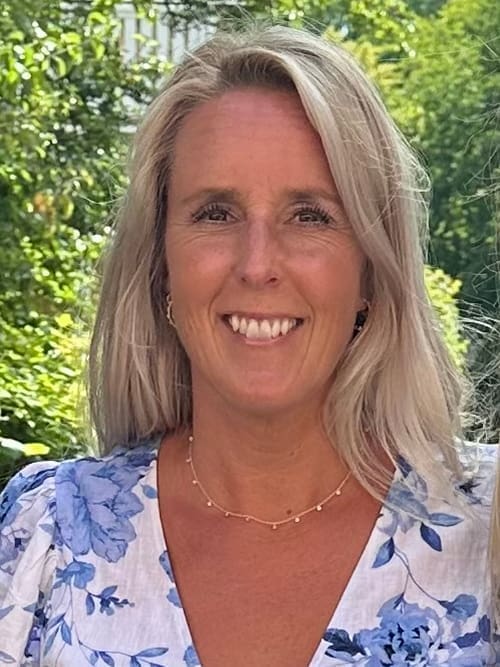
The teaching is planned by Anna Samrud, a certified upper secondary teacher of Swedish and history. During the school year, Swedish traditions are incorporated into the teaching, for example Lucia, Christmas, Shrove Tuesday, Easter and the end-of-school-year celebration.
All courses are designed according to SMUL Academy’s pedagogical concept.

Learning Resources

The course is designed to give students practice in Swedish and Swedish culture, in accordance with the Swedish National Agency for Education’s syllabus for supplementary Swedish. The study material in the course Writing in Focus includes:

  • Skriva is a textbook for Swedish levels 1–3 (upper secondary school) that helps students develop the ability to write different types of texts. The book has an introductory chapter on the craft of writing in general. It highlights different genres, structure, source management, quotation technique, language correctness and other fundamentals for developed writing. The book is divided into three larger chapters on writing argumentative and investigative texts, as well as creative writing. Each chapter then covers a number of text types.
  • Skrivförståelse 1 Grund - Vägen till ett bättre skriftspråk is a textbook that focuses on the craft of writing. To give students the writing skills expected in further studies and working life, focused writing practice is needed. Through the Skrivförståelse series, students learn how they can develop and improve their texts. The work in the books progresses systematically with the help of explanations and concrete practice tasks. Skrivförståelse 1 Grund contains basic writing rules and grammar and aims to give the student a solid foundation for their writing.

We also recommend purchasing a Swedish dictionary. Examples of dictionaries:

  • Bonniers Swedish Dictionary
  • Norstedts Swedish Dictionary
  • Natur Kultur’s Swedish Dictionary
  • Swedish Dictionary published by the Swedish Academy.

View a sample of the textbook Skriva here >>
View a sample of the textbook Skrivförståelse 1 Grund - Vägen till ett better written language here >>

If you have questions about the detailed structure, we recommend that you read the page Frequently Asked Questions about SMUL Academy

Lesson options

Class Write 1 Europe (Wednesday)
Teacher: Anna Samrud

Stockholm: 7:15 PM

Class Write 2 North America (Monday)
Teacher: Anna Samrud

Los Angeles: 1:00 PM
Dallas: 3:00 PM
New York: 4:00 PM

Convert to see the lesson time in your location:
https://www.worldtimebuddy.com/

Number of Lessons

30 lessons

Reporting and Credits

A completed study plan, required reading, and reporting provide 50 credits at SMUL Academy and a diploma as proof.

Term start and end

Parent meeting August 30, 7:00 PM (Swedish time)
Course start in the second week of September
End-of-school-year celebration June 13, 2027

Tuition fee for teacher-led distance learning

CAD$ 869*
EUR€ 538**
USD$ 634**

Based on exchange rate April 1, 2026

Recalculate in your own currency

Course teacher in charge